Author: Riajul Momen

  • Prosthetics vs Orthotics: Key Differences Explained

    Prosthetics vs Orthotics: Key Differences Explained

    Introduction

    When people hear the words prosthetics and orthotics, they often mix them up. Both fields deal with mobility devices and physical support. But they serve very different purposes. Understanding the difference can help you make better decisions about your care.According to the American Orthotics and Prosthetics Association (AOPA), over 5.6 million people in the United States use orthotic or prosthetic devices. That number is growing every year. Whether you are a patient, caregiver, or simply curious, this guide will give you a clear picture of what each device does and who benefits most.

    Keypoints

    • Clear explanation of prosthetics vs orthotics
    • Simple breakdown of key differences and uses
    • Who needs prosthetic devices and why
    • Who benefits most from orthotic support
    • Common types of prosthetic and orthotic devices
    • Expert insights from Genfinity O&P specialist Deepak
    • Cost, insurance, and treatment process overview
    • Guidance for recovery, comfort, and better mobility decisions

    What Is a Prosthetic Device

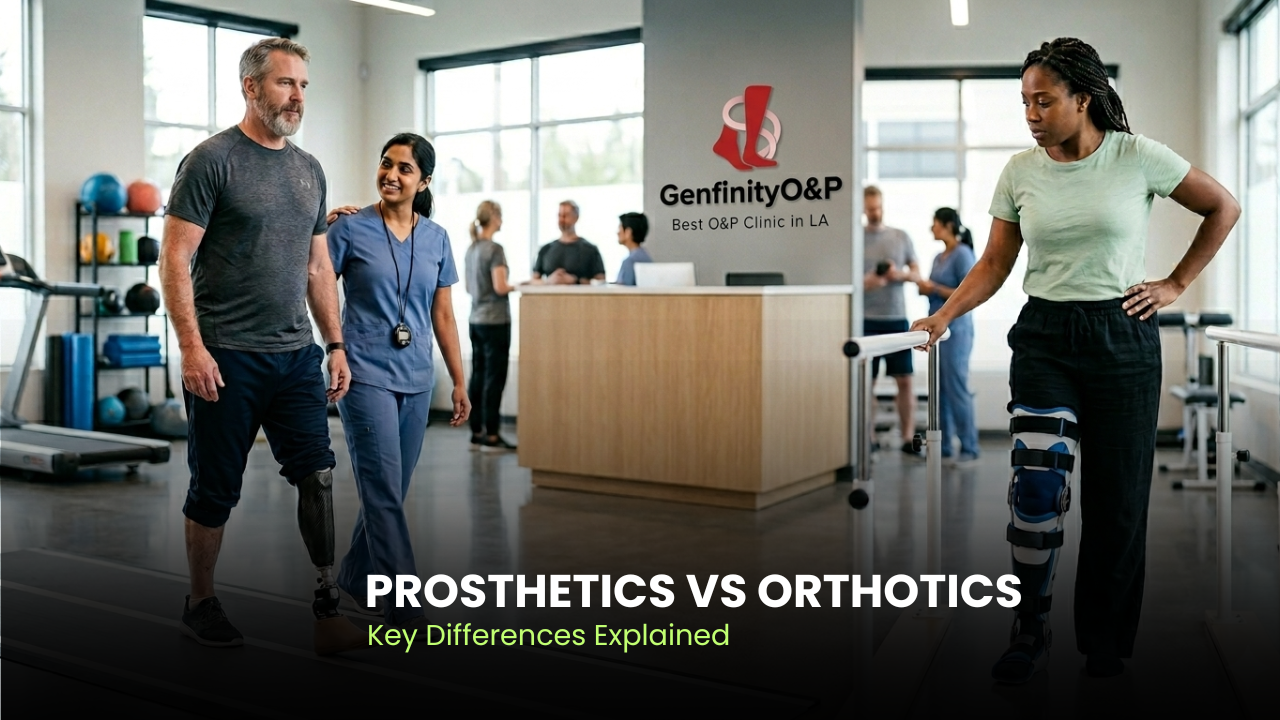
    A prosthetic device replaces a missing body part. This could be a limb, a joint, or even a facial structure. People who have had amputations or were born without a limb often rely on prosthetics to regain function and independence.

    Modern prosthetics have come a long way. Today, many are built with lightweight carbon fiber and smart sensors. Some even respond to nerve signals from the brain. The goal is always to restore as much natural movement as possible.

    Prosthetics vs Orthotics
    Prosthetics vs Orthotics

    Common Types of Prosthetic Devices

    • Transtibial prosthesis (below the knee)
    • Transfemoral prosthesis (above the knee)
    • Upper limb prosthetics for arm or hand loss
    • Myoelectric prosthetics that use muscle signals
    • Activity-specific prosthetics for sports or swimming

    Each type is custom-fitted to the individual. A certified prosthetist takes detailed measurements and casts of the residual limb. The fitting process can take several weeks and often requires adjustments over time.

    Deepak, owner of Genfinity Orthotics & Prosthetics with 25+ years of experience, recommends a trial socket and professionally aligned custom soles to ensure the perfect fit, comfort, and performance. He strongly advises patients to choose customized solutions for better mobility, long-term support, and improved daily comfort

    What Is an Orthotic Device

    An orthotic device supports, aligns, or corrects a body part that is still present but not working properly. Orthotics do not replace anything. Instead, they help the existing structure work better or protect it from further damage.

    Orthotics are used for a wide range of conditions. These include flat feet, scoliosis, knee instability, and post-surgical recovery. They can be rigid or flexible, depending on the level of support needed.

    Common Types of Orthotic Devices

    • Ankle-foot orthosis (AFO) for drop foot or weakness
    • Knee orthosis (KO) for ligament injuries
    • Spinal orthosis for scoliosis or back pain
    • Custom foot orthotics for plantar fasciitis
    • Wrist splints for carpal tunnel syndrome
    Prosthetics vs Orthotics
    Prosthetics vs Orthotics

    Unlike prosthetics, orthotics range from fully custom devices to prefabricated options available at pharmacies. Your physician or orthotist will determine what level of customization you need based on your diagnosis.

    Expert Insight: Deepak, 25+ years experience expert, highlights that custom foot orthotics, combined with regular stretching, can significantly reduce plantar fasciitis pain, by up to 54% within 12 weeks.

    Prosthetics vs Orthotics: A Side-by-Side Comparison

    The table below breaks down the most important differences between the two fields. Use this as a quick reference when exploring your options.

    Who Needs Prosthetics vs Orthotics

    When Prosthetics Are the Right Choice

    If you have experienced limb loss due to trauma, diabetes, vascular disease, or cancer, prosthetics may be the solution. The level of amputation and your overall health will determine which type of prosthetic is best for you.

    In the United States, diabetes and vascular disease account for more than 54% of all amputations each year. Early intervention and proper fitting can dramatically improve quality of life after amputation.

    When Orthotics Are the Right Choice

    If you have a condition that affects your gait, balance, or joint stability but still have your limbs intact, orthotics are likely the better fit. Common candidates include stroke survivors, children with cerebral palsy, athletes recovering from ligament injuries, and adults with chronic arthritis.

    Orthotics are also used preventively. A runner with high arches, for example, might use foot orthotics to prevent future injuries before they happen.

    Practical Tips for Recovery

    Whether you are adapting to a new prosthetic or starting with an orthotic device, recovery takes time and consistency. These practical tips can help you get the most out of your device and heal faster.

    Recovery PhaseProsthetics TipsOrthotics Tips
    Week 1-2Keep residual limb elevated. Monitor swelling.Wear device for short periods only.
    Week 3-4Begin gait training with therapist.Increase wear time gradually each day.
    Month 2-3Practice walking on uneven ground.Strengthen surrounding muscles daily.
    Month 4+Explore activity-specific devices.Review fit with your orthotist regularly.

    General Recovery Tips for Both Devices

    • Attend all follow-up appointments with your specialist.
    • Perform prescribed physical therapy exercises every day.
    • Report any skin irritation, pain, or pressure sores right away.
    • Maintain a healthy weight to reduce stress on your device and joints.
    • Keep a daily log of wear time, comfort level, and any concerns.

    Skin care is especially important for prosthetic users. The residual limb is under constant pressure and friction. Use a gentle cleanser daily and inspect the skin after each use. Any redness that lasts more than 20 minutes after removing the device should be reported.

    The Role of a Certified Specialist

    Both prosthetics and orthotics are provided by licensed professionals known as prosthetists and orthotists. In the United States, board certification is issued by the American Board for Certification in Orthotics, Prosthetics and Pedorthics (ABC).

    Choosing a certified specialist matters. Research shows that patients who work with ABC-certified practitioners have better functional outcomes and report higher satisfaction with their devices. Always verify credentials before starting treatment.

    What to Expect at Your First Appointment

    • A full physical evaluation of your condition or residual limb.
    • A discussion of your lifestyle, goals, and daily activities.
    • Measurements, scans, or casts depending on the device needed.
    • A timeline and cost estimate for fabrication and fitting.
    • An overview of the rehabilitation process ahead.

    Most fittings take between one and four weeks, depending on the complexity of the device. Plan for multiple visits, especially in the first few months, as adjustments are a normal part of the process.

    Cost and Insurance Coverage

    Cost is often a major concern when choosing prosthetic or orthotic solutions. While prosthetic devices can range from $5,000 to over $70,000, orthotic options are generally more affordable, but quality and proper alignment make all the difference.

    At Genfinity O&P (you can now get custom soles starting at just $200 USD, designed for better comfort, support, and daily mobility.

    If the budget has been holding you back, this is a practical way to start improving your foot health without compromise, guided by expert care and proper fitting.

    Conclusion

    Prosthetics and orthotics are two distinct but equally important fields of medicine. Prosthetics replace missing limbs and body parts, while orthotics support and correct existing structures. Both require professional evaluation, custom fitting, and consistent rehabilitation to deliver the best results.

    Understanding the difference helps you ask better questions, advocate for yourself, and find the right solution faster. Whether you are just starting your journey or seeking to optimize a current device, working closely with a certified specialist makes all the difference.

    If you found this guide helpful, consider reading our related article on how to choose the right physical therapist after limb surgery. And if you have questions about your specific condition, reach out to a certified prosthetist or orthotist in your area for a personalized evaluation.

    Ready to take the next step? Visit Genfinity Orthotics & Prosthetics and talk to a certified specialist today to find the right device for your needs and lifestyle.
  • Everything You Should Know About Orthotics and Prosthetics

    Everything You Should Know About Orthotics and Prosthetics

    Introduction

    When people lose a limb or deal with a musculoskeletal condition, their world changes overnight. The good news is that modern medicine offers powerful solutions through orthotics and prosthetics. These fields have advanced significantly in the last two decades, giving patients tools to move, work, and live with renewed independence.

    Whether you are a patient exploring your options, a caregiver seeking clarity, or a healthcare professional looking for a reliable reference, this guide covers what you need to know. From basic definitions to device types, fitting processes, and recovery expectations, this article brings it all together in one place.

    Keypoints

    • Orthotics support existing body parts, while prosthetics replace missing limbs.
    • Common users include accident victims, diabetes patients, and people with congenital conditions.
    • Orthotics are widely used for spine issues, injuries, and foot problems.
    • Prosthetics include lower-limb (leg) and upper-limb (arm/hand) devices.
    • Modern prosthetics use advanced tech like microprocessors and myoelectric signals.
    • The fitting process involves assessment, design, fitting, and rehabilitation.
    • Materials like carbon fiber, silicone, and titanium improve durability and comfort.
    • Costs can be high, with advanced prosthetics exceeding $100,000.

    What Are Orthotics and Prosthetics

    Orthotics and prosthetics are two distinct but closely related areas of rehabilitative medicine. Both involve custom-designed devices that support or replace parts of the human body, helping individuals regain function after injury, illness, or congenital conditions.

    Orthotics refers to externally applied devices, often called orthoses, that support, correct, or improve the function of existing body parts. A back brace, a foot insert, or a knee brace are all examples. These devices do not replace limbs but rather assist or stabilize them.

    Prosthetics, on the other hand, involves the design and fitting of artificial limbs or body parts. A prosthetic leg, arm, hand, or foot replaces a missing body part and helps restore function. The goal in both cases is to improve quality of life and physical capability.

     orthotics and prosthetics
    orthotics and prosthetics

    Who Needs Orthotics and Prosthetics

    The need for orthotic or prosthetic devices comes from a wide range of medical conditions. Understanding who benefits from these devices helps contextualize just how essential this field is to modern healthcare.

    Common Reasons for Prosthetic Devices

    • Traumatic injuries from accidents or combat
    • Vascular disease, including complications from diabetes
    • Cancer requiring limb amputation
    • Congenital limb deficiencies present at birth

    Common Reasons for Orthotic Devices

    • Scoliosis and other spinal conditions
    • Cerebral palsy and neurological disorders
    • Sports injuries and ligament damage
    • Plantar fasciitis, flat feet, and other foot conditions
    • Post-surgical recovery and joint instability

    According to the Amputee Coalition, approximately 2 million people in the United States are currently living with limb loss, and nearly 185,000 amputations are performed each year. The demand for prosthetics continues to rise alongside an aging population and increasing rates of diabetes-related complications.

    Key Statistics at a Glance

    Orthotics and Prosthetics
    Orthotics and Prosthetics

    Types of Orthotic Devices

    Orthotic devices span a wide range of body areas and clinical needs. They are typically named using anatomical abbreviations that identify the joints or regions they support.

    Lower Limb Orthotics

    Foot orthoses (FO), ankle-foot orthoses (AFO), and knee-ankle-foot orthoses (KAFO) are among the most prescribed devices in clinical practice. AFOs are especially common in patients recovering from stroke, cerebral palsy, or foot drop. A well-fitted AFO can improve walking speed and reduce fall risk significantly.

    Spinal Orthotics

    Spinal orthoses address conditions ranging from post-operative stabilization to scoliosis management. The Boston Brace and the Milwaukee Brace are widely used in pediatric scoliosis cases. For adults, lumbar sacral orthoses (LSO) help manage chronic lower back pain and support post-surgical recovery.

    Upper Limb Orthotics

    Wrist-hand orthoses (WHO) and elbow orthoses are commonly used after nerve injuries, tendon repairs, or for conditions like carpal tunnel syndrome. These devices help maintain joint alignment and protect healing tissue while allowing controlled movement.

    Types of Prosthetic Devices

    Prosthetics are classified by the level of amputation and the function they restore. Advances in materials science and microprocessor technology have dramatically improved the performance of modern prosthetic limbs.

    Lower Limb Prosthetics

    Transtibial prostheses (below-knee) and transfemoral prostheses (above-knee) are the most common types. Patients with below-knee amputations generally adapt more quickly because the knee joint remains intact. Microprocessor-controlled knees, such as the Ottobock C-Leg, use sensors and hydraulic systems to adjust resistance in real time based on walking speed and terrain.

    Upper Limb Prosthetics

    Upper limb prosthetics range from passive cosmetic devices to highly sophisticated myoelectric arms. Myoelectric prostheses pick up electrical signals from residual limb muscles to control hand and wrist movements. Devices like the i-LIMB from Ossur offer individual finger articulation and grip pattern customization through app-based control.

    Body-Powered vs Myoelectric Prosthetics

    • With body-powered devices, movement comes from cables and harnesses controlled by your body.
    • In contrast, myoelectric devices respond to muscle signals using advanced electrodes.
    • For more flexibility, hybrid prosthetics blend both technologies into one system.

    The Fitting Process for Orthotics and Prosthetics

    Getting fitted for a prosthetic or orthotic device is not a single appointment. It is a structured clinical process that unfolds over several weeks or months, depending on the device and the patient’s condition.

    Initial Assessment

    The process begins with a comprehensive evaluation by a certified orthotist or prosthetist. This includes reviewing medical history, assessing strength and range of motion, measuring limb dimensions, and discussing the patient’s activity goals. A patient who wants to return to running marathons will have very different device requirements compared to someone who wants to walk comfortably at home.you can schedule a consultation with Genfinity O&P to get a personalized clinical evaluation.

    Casting and Fabrication

    For most custom devices, a cast or digital scan of the body part is taken to create an accurate mold. Modern clinics increasingly use 3D scanning technology to improve accuracy and reduce fabrication time. The device is then built using materials like carbon fiber, thermoplastic, or silicone, depending on the application.

    Fitting and Adjustments

    Once fabricated, the device is fitted and tested. Adjustments are made to ensure comfort, alignment, and function. This stage often involves gait analysis for prosthetic legs or functional movement testing for orthotic devices. Multiple fittings may be required before the device meets clinical standards.

    Rehabilitation and Training

    Wearing a new device is just the beginning. Patients work with physical and occupational therapists to learn how to use their orthotics or prosthetics effectively. Training covers balance, strength building, fall prevention, and activity-specific techniques. Research shows that patients who participate in structured rehabilitation programs achieve significantly better functional outcomes.

     orthotics and prosthetics
    orthotics and prosthetics

    Materials Used in Modern Devices

    The choice of materials plays a critical role in device performance, weight, and durability. Today’s orthotics and prosthetics benefit from aerospace-grade materials and biomedical engineering innovations.

    • Carbon fiber: Lightweight, strong, energy-return support
    • Thermoplastics: Heat-moldable for custom orthotic fit
    • Titanium alloys: Strong, lightweight for joints
    • Silicone: Soft, skin-like for liners and covers
    • 3D-printed polymers: Fast, cost-effective custom orthotics

    What Experts Say About Progress in the Field

    The orthotics and prosthetics industry has seen remarkable innovation in the past decade. Leading rehabilitation engineers and clinicians point to three major areas of advancement: sensor integration, neural interfacing, and additive manufacturing.

    Dr. Hugh Herr of MIT Media Lab, one of the foremost researchers in bionics, has demonstrated that neural-linked prosthetics can restore proprioception, the sense of limb position, to amputees. This breakthrough moves the field beyond mechanical function toward a true sensory experience for the wearer. (Here need our Boss Rishabh statement)

    On the orthotic side, wearable sensor technology is enabling real-time feedback systems that adjust brace tension dynamically based on movement data. These smart orthoses are particularly promising for patients managing progressive neuromuscular conditions.

    Cost, Insurance, and Access Considerations

    Please check the cost and let make it correct as per USA 

    Cost remains a significant barrier to orthotics and prosthetics access for many patients. A basic prosthetic limb can cost between $5,000 and $50,000, while advanced microprocessor-controlled devices can exceed $100,000. Custom orthotic devices typically range from $500 to $5,000 depending on complexity.

    In the United States, Medicare and Medicaid provide coverage for medically necessary prosthetics and orthotics, though coverage limits and documentation requirements vary. Private insurance policies differ widely. Veterans may access devices through the VA healthcare system, which covers a broad range of high-technology prosthetics.

    Globally, access remains highly unequal. The World Health Organization estimates that fewer than 10% of people who need prosthetics in low-income countries have access to them. Non-profit organizations and social enterprises are working to bridge this gap through low-cost device manufacturing and training programs.

    If you found this guide useful, you may also benefit from our detailed breakdown of AFO types and their clinical applications, our comparison of body-powered versus myoelectric prosthetics, and our guide on insurance documentation strategies for prosthetic device approvals.

    For authoritative clinical guidance, the American Academy of Orthotists and Prosthetists (AOPA) publishes evidence-based practice guidelines and policy updates that are highly valuable for both professionals and informed patients.

    Final Thoughts

    Orthotics and prosthetics represent some of the most meaningful work in modern healthcare. These devices do not just restore function. They restore identity, independence, and the ability to participate fully in life. Whether you are facing amputation, managing a chronic condition, or supporting someone who is, understanding the landscape of available solutions is the first step toward better outcomes.

    The field continues to evolve rapidly. What was considered state-of-the-art five years ago is now being surpassed by devices that respond to neural signals, adapt in real time, and integrate seamlessly with the human body. Staying informed and working closely with qualified certified orthotists and prosthetists remains the most reliable path to the best possible result.